
How they connect
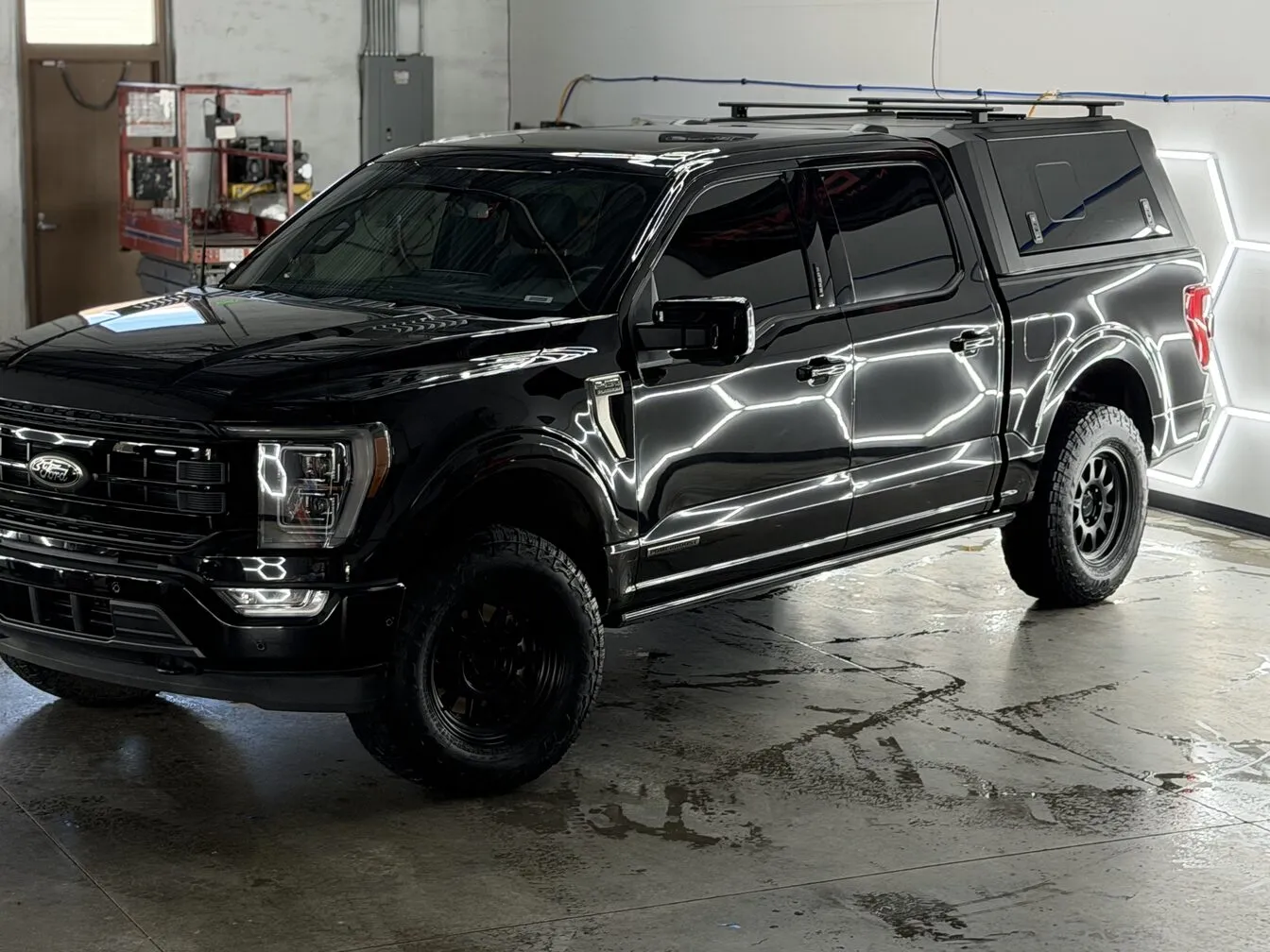
Both hitches put the connection in the bed, near the rear axle, instead of behind the bumper. They differ in what grabs the trailer.
A gooseneck is a ball and coupler. The ball, usually 2-5/16 inch, sits in the bed floor, and in CURT’s words “the coupler comes down onto the ball, similar to a bumper-pull coupler.” The mount goes under the bed. B&W’s Turnoverball bolts to existing holes in the truck frame and needs only a 4-inch hole in the bed, with no welding and no bed removal. When you are not towing, the ball flips over or lifts out, and the bed floor is nearly flat.
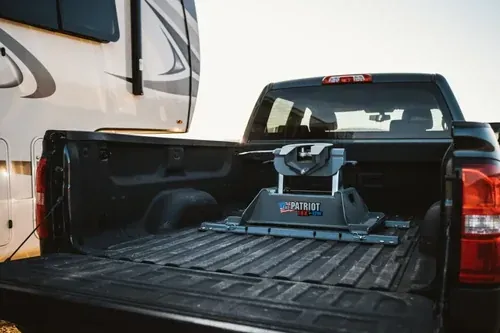
A 5th wheel is a kingpin and jaws. The trailer’s pin box carries a kingpin that “inserts into the 5th wheel head, similar to a semi truck hitch,” as CURT puts it. The head stands above the bed on rails or a base, and it takes up bed space until you lift it out.
A flat bed floor also leaves room for a tonneau cover on a gooseneck truck. The BAK Revolver X4s can work on a 5th wheel truck when the truck, hitch and cover combination supports it. See tonneau covers.

5th wheel vs gooseneck at a glance
| 5th wheel | Gooseneck | |
|---|---|---|
| Connection | A kingpin on the trailer locks into jaws in a hitch head above the bed | A coupler on the trailer drops over a 2-5/16 inch ball in the bed floor |
| Capacity | Commonly 16,000 to 30,000 lb (CURT, Lippert) | Commonly 30,000 lb or more (CURT); Lippert lists 25,000 to 38,000 lb |
| Ride | Smoother and more stable; tighter jaws can reduce chucking (CURT, Lippert) | Noisier, with more vibration and road shock into the truck (CURT, Lippert) |
| Bed space and cost | The head takes bed space until it is lifted out, and costs more (CURT, Lippert) | The ball folds or comes out and leaves the bed nearly flat, and generally costs less (Lippert) |
Hitch capacities from CURT and Lippert, checked 27 September 2026. Ratings vary by model, and the ranges above are hitch ratings rather than what your truck can pull.
The truck’s own ratings usually set the limit first. Chevrolet lists maximum trailering for the 2026 Silverado 2500 HD at 22,420 pounds, below the 25,000-pound rating of a B&W Companion OEM 5th wheel hitch. Ford’s towing guide gives a separate 5th wheel and gooseneck rating for every Super Duty configuration, and it changes with engine, cab and axle ratio. Payload matters as much as the tow rating, because the kingpin or coupler weight rides in the bed. Ford’s guide tells owners to make sure payload covers the kingpin weight plus passengers and cargo. If the trailer is headed over I-70, the brakes and the trailer brake controller deserve the same attention as the hitch, and our towing accessories guide covers that setup.
Factory pucks keep the parts bill down
What a gooseneck or 5th wheel hitch installation costs depends on what the truck already has. A truck with factory pucks takes a hitch that drops into them. A truck without them needs a mount first: under-bed rails for a 5th wheel, or an under-bed gooseneck mount.
List prices on B&W’s site, checked 3 October 2026:
- Turnoverball gooseneck hitch: from $699, with a 2-5/16 inch ball
- Patriot rail-mounted 5th wheel hitch: from $899 for the 18K, with rails and truck brackets sold separately
- 25K Companion OEM 5th wheel hitch for Ford factory pucks: $1,499
A factory prep package is its own line on a Ford. The Super Duty 5th Wheel/Gooseneck Hitch Prep Package is a factory option or a dealer-installed accessory, and the hitch is bought separately. Ford also notes the package does not work with drop-in bedliners, sportliners or bed mats, so a truck with a drop-in liner needs a plan for it.
At our shop, installation is quoted for your truck and hitch. A 5th wheel on factory pucks takes about 2 hours, a Turnoverball gooseneck about 3 to 5 and an under-bed system about 4 to 5.
We install both on under-bed rails and on factory puck systems, and when a truck has factory pucks we use them.
The job-by-job numbers are in what trailer hitch installation costs, and our 5th wheel and gooseneck hitch installation page covers the hitches we fit.
Which trucks come ready for one
Ford, Ram and GM all offer a factory puck system on their heavy-duty pickups. B&W describes a puck system as “a 5-hole towing system that is installed onto the frame of the truck by the truck manufacturer,” and it sells its Companion OEM 5th wheel hitch to lock into the puck platforms on newer Ford, GM and Ram trucks.
- Ford Super Duty: the 5th Wheel/Gooseneck Hitch Prep Package, a factory option or a dealer-installed accessory. The version for 2023 to 2027 trucks includes frame brackets, an under-bed crossmember and a 7-pin harness in the bed, and it fits the 6.75-foot and 8-foot beds. Ford’s own gooseneck kit for 2020 to 2026 Super Duty requires it.
- Chevrolet Silverado HD and GMC Sierra HD: Chevrolet lists a Gooseneck/5th Wheel Prep Package on the Silverado HD. B&W builds separate Companion OEM bases for the 2016 to 2019 and the 2020 to 2026 GM puck systems, so the model year decides which base fits.
- Ram 2500 and 3500: B&W lists Ram among the trucks its Companion OEM fits. Ask for the truck’s build sheet to confirm the puck option was ordered.
A truck without pucks needs rails or an under-bed mount instead. B&W’s Patriot and rail-mounted Companion fit industry standard rails, which bolt to the frame with brackets made for each truck. A gooseneck without pucks goes on an under-bed mount such as the Turnoverball. Adapters can then let one mount take the other hitch, which the adapters section covers.
On a short-bed truck, a 5th wheel trailer’s nose can reach the cab in a tight turn. B&W’s Patriot slider moves the hitch back 12 inches for maneuvering, and CURT describes sliders as made to let short-bed trucks turn without obstruction. B&W also says many owners tow 5th wheels with short beds on a fixed Companion, depending on where the kingpin sits and the shape of the trailer’s front. On a short-bed truck, a slider is our normal starting point.
Lifted or leveled truck?
A lift, a level or taller tires raise the whole bed, hitch included, and Ford notes that tailgate height varies with tire size. Hitch up a trailer set for a stock truck and its nose rides high, which changes how its weight sits on its axles.
Bringing the trailer back to level means lowering its front, at the hitch or at the trailer’s pin box or coupler. Every inch the front comes down is an inch less between the trailer and the bed rails, and the trailer needs room there for the truck to pitch under it on a dip or a steep driveway. On a tall lift with big tires, level and rail clearance can run out together.
Measure before you buy either the lift or the hitch.
Adapters and switching between them
There are two ways to tow a 5th wheel camper from a gooseneck truck, or the reverse, and each has limits.
The first works in the truck bed. CURT makes a 5th wheel adapter plate that drops into a gooseneck hole and gives you industry standard 5th wheel rails, and a 5th wheel gooseneck hitch that pins into existing rails and gives you a ball. B&W’s route is the Companion 5th wheel hitch mounted on a Turnoverball. CURT rates its in-bed adapters at 20,000 to 25,000 pounds, lower than its dedicated hitches, and Lippert says adapters can affect ride quality and are best as a temporary or secondary setup.
The second works on the trailer. A replacement pin box swaps the 5th wheel kingpin for a gooseneck coupler. Gen-Y’s Executive 5th wheel-to-gooseneck pin box is rated up to 30,000 pounds of towing depending on the model, uses a 2-5/16 inch coupler, and bolts to named Lippert and LCI pin box frames. Gen-Y also says it works with a recessed ball only if the top of the ball sits within 1 inch of the bed floor. Ask the trailer maker before changing the pin box, because the trailer’s own rating and warranty come from them.
If you tow a camper some weekends and a flatbed the rest of the time, the in-bed route keeps one truck ready for both. If the camper is the only trailer, a dedicated 5th wheel hitch keeps the full rating and the smoother ride.
Questions people ask
Which is stronger, a 5th wheel or a gooseneck?
Can you pull a 5th wheel with a gooseneck ball?
Why are campers 5th wheel and not gooseneck?
What are the disadvantages of using a gooseneck trailer?
What size truck do I need to pull a 14000 lb fifth wheel?
Do you need a CDL to pull a 40 ft gooseneck trailer?
Where these numbers come from
Sources
Every rating, price and requirement on this page comes from the manufacturer or the regulator. Checked 27 September 2026, and B&W’s prices on 3 October 2026.
- CURT, gooseneck vs 5th wheel: how each hitch connects, capacity ranges, ride and noise, bed drilling, sliders, and adapter types and their 20,000 to 25,000-pound rating
- Lippert, 5th wheel vs gooseneck hitch (June 2025): the capacity table, chucking and vibration, bed space, relative cost, and adapters and ride quality
- B&W Trailer Hitches, Turnoverball gooseneck hitch: the 2-5/16 inch ball, the 4-inch bed hole, frame mounting and list price
- B&W Trailer Hitches, Companion OEM: the puck system description and Ford, GM and Ram fitment
- B&W Trailer Hitches, 25K Companion for Ford pucks: the 25,000-pound rating, list price and short-bed guidance
- B&W Trailer Hitches, Companion for 2016 to 2019 GM pucks and for 2020 to 2026 GM pucks: separate bases by GM model year
- B&W Trailer Hitches, rail-mounted 5th wheel hitch and 18K Patriot: industry standard rails, brackets sold separately, the 12-inch slider and list price
- Ford, Super Duty 5th Wheel/Gooseneck Hitch Prep Package: contents, fitment and the bedliner note
- Ford, Super Duty gooseneck hitch kit: the prep package requirement and factory or dealer installation
- Ford, 2025 RV and Trailer Towing Guide: the 15 percent kingpin weight, payload and kingpin weight, F-150 maximum payload, 5th wheel and gooseneck ratings by configuration, and tailgate height by tire size
- Chevrolet, 2026 Silverado HD: maximum trailering and the Gooseneck/5th Wheel Prep Package
- Gen-Y, Executive 5th wheel-to-gooseneck pin box: rating, coupler size, compatible frames and the recessed-ball note
- FMCSA, commercial driver’s license classes: the Class A definition and the commerce requirement
- Colorado DMV, CDL general information: Colorado’s Class A definition and the recreational vehicle exemption
Ratings differ between models and change with new model years. Check the figures for the exact hitch and trailer against your truck’s own ratings before you tow.