
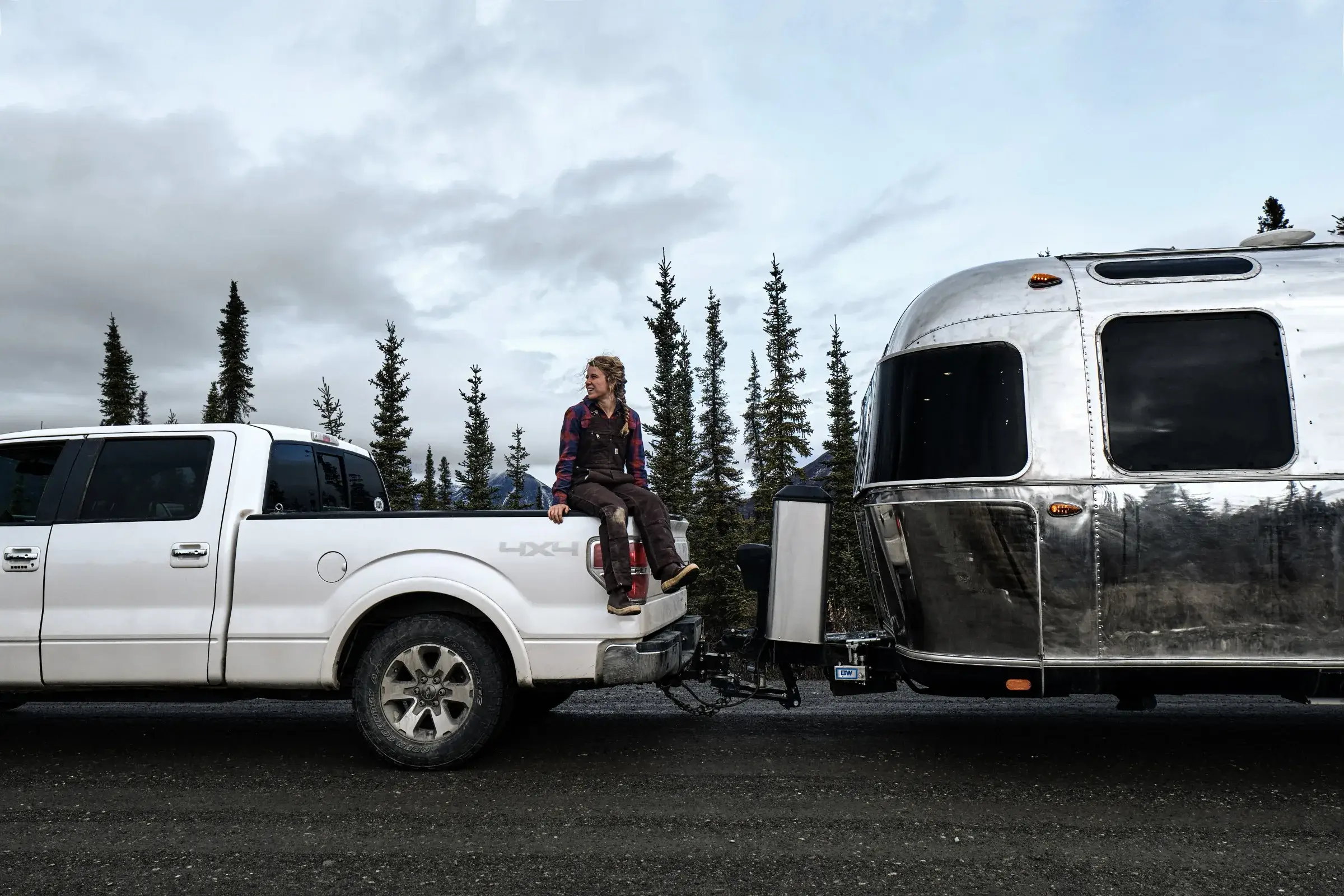
Trailer hitch installation in Arvada
Start with the trailer. We install receiver, gooseneck and 5th wheel hitches at our Arvada shop, with the wiring, brake controller and load support your trailer needs. A receiver with 7-pin wiring takes about 1.5 to 3 hours, and a gooseneck or 5th wheel about 2 to 5, depending on the mount. Hitch installs usually book about 3 to 5 days out.
What are you towing?
The trailer decides the setup. Its loaded weight, its tongue weight, the coupler it uses and whether it has electric brakes set the hitch, the plug and what else the truck needs, so those are the first things we ask. Send the trailer's numbers, or a photo of its tongue and its plug, and we build the truck around it.
Colorado requires brakes on every trailer of 3,000 pounds gross weight or more, applied from the cab, which is why most campers and equipment trailers need a brake controller as well as a hitch.
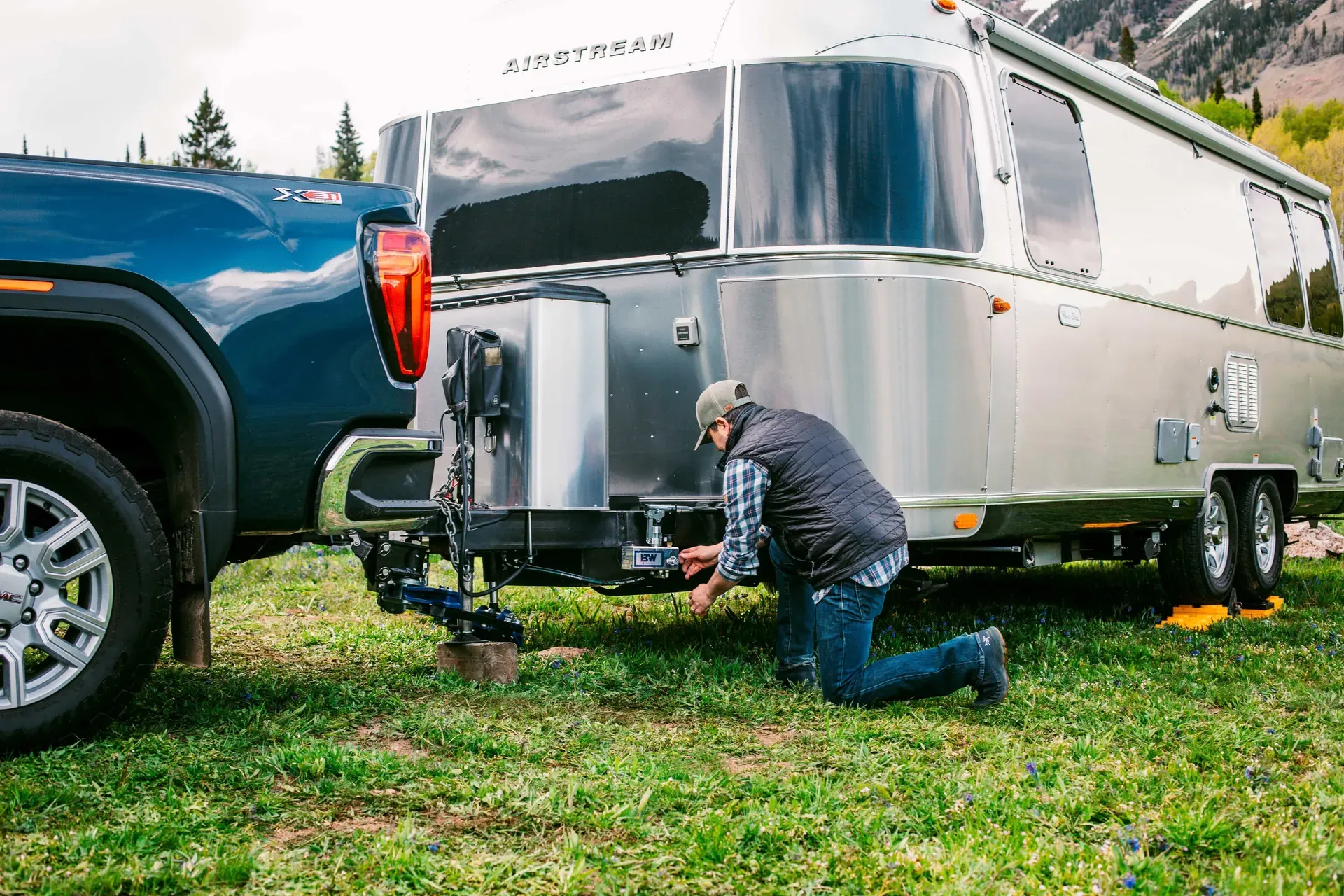
| Trailer | Hitch | Plug and brakes | Also plan for |
|---|---|---|---|
| Travel trailer or camper | Receiver and a ball mount at the right drop | 7-pin and a brake controller | Weight distribution and sway control |
| Fifth-wheel camper | 5th wheel in the bed | 7-pin in the bed and a brake controller | Air bags for the pin weight |
| Gooseneck, flatbed or equipment trailer | Gooseneck ball in the bed | 7-pin, often in the bed, and a brake controller | Payload, and air bags if the rear squats |
| Horse trailer | Receiver or gooseneck, whichever coupler the trailer has | 7-pin and a brake controller | The same as a camper or a gooseneck |
| Boat | Receiver and ball mount | 4-pin on a light trailer, 7-pin if it has electric brakes | More drop on a lifted or leveled truck |
| Utility or landscape trailer | Receiver, ball mount and the right ball size | 4-pin, and brakes from 3,000 pounds gross | A locking hitch pin |
A towing setup does five jobs
The hitch connects the trailer. That is one job of five: a trailer on the right hitch can still sit nose-down, push the truck on a long descent or run without brake lights. We quote the five together because each one changes the next: the truck's ride height sets the drop, and a brake controller needs a 7-pin to reach the trailer's brakes.
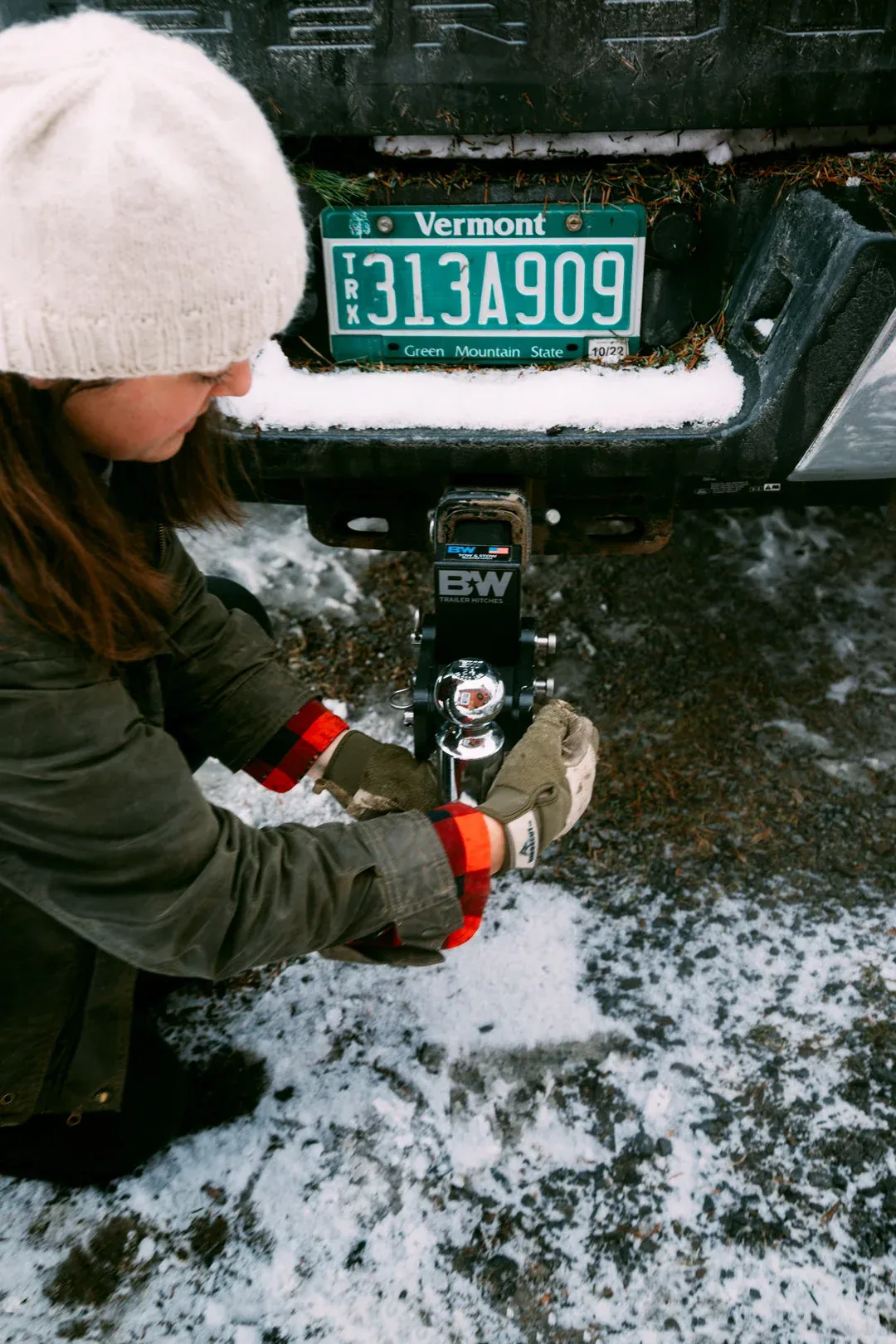
| Job | What does it | More on it |
|---|---|---|
| Connect | A receiver hitch, a gooseneck ball or a 5th wheel | Receiver hitches, below; 5th wheel and gooseneck |
| Level | A ball mount with the right rise or drop, and weight distribution on some bumper-pull trailers | Weight distribution and sway control |
| Control | A brake controller for the trailer's electric brakes, and sway control | Brake controllers, below |
| Power | 4-pin or 7-pin wiring, with a 7-pin in the bed for a gooseneck or 5th wheel | Trailer wiring, below |
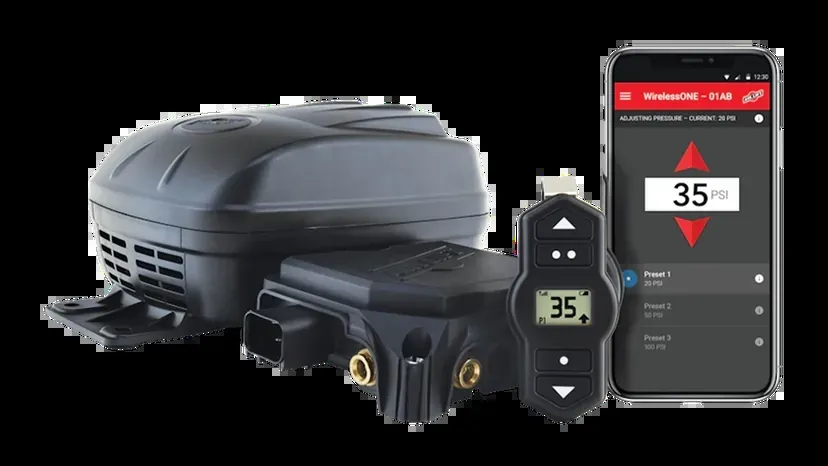
| Support | Air springs and an onboard compressor, which level the truck under a heavy tongue and add no towing capacity | Air bags and load support |
Receiver hitches
A receiver hitch bolts to the truck's frame and gives you a square opening at the back for a ball mount, a bike rack or a cargo carrier. CURT rates the hitch classes like this: Class 1 and Class 2 use a 1-1/4-inch receiver and are rated up to 2,000 and 3,500 pounds of gross trailer weight. Class 3 and Class 4 use a 2-inch receiver and are rated up to 8,000 and 10,000 pounds. Class 5 runs from 16,000 to 20,000 pounds, with a 2-1/2-inch receiver on the heaviest versions.
The class is a ceiling. In CURT's words, "Your towing capacity is always limited to the lowest-rated towing component, whether the hitch, an accessory, the vehicle, your trailer or any other component of the towing system." CURT's Class 3 hitch for the Honda CR-V has a 2-inch receiver and is rated to 3,500 pounds. The ball mount, the ball, the coupler and your truck's own tow rating count the same way, so we pick the hitch last.
Receivers come in 2-inch, 2-1/2-inch and 3-inch openings, and heavy-duty pickups can have one of the larger two. The size decides which ball mounts and accessories fit, not how much the truck can tow. If your truck already has a receiver, you may not need a new one: often the fix is a ball mount at the right height, wiring or a brake controller. We check its size, rating and condition before we quote a replacement.
We fit CURT, Husky and other vehicle-specific receivers, and the vehicle picks the brand. Husky says its line fits "nearly every vehicle on the road." We choose the one made for your year, model and configuration, then check its rating against the rest of the setup.
A receiver also carries a hitch-mounted bike rack or cargo carrier when there is no trailer behind the truck. Tell us what will go in it, and we check the rack and its load against the hitch's rating.
Ratings change with the model and your truck's setup, so we check both before we quote.
Brake controllers and trailer wiring
A 4-pin plug carries the trailer's tail lights, turn signals and brake lights plus a ground, which covers a small utility trailer, a pop-up camper or a boat trailer. A 7-pin, also sold as a 7-way, adds a wire for electric trailer brakes, a 12-volt feed and reverse lights, and it is the plug campers, fifth-wheel trailers and equipment trailers use. Where a harness is made for your truck, it plugs into the factory connectors with no splicing. Vehicles that run the stop, tail and turn signals on three separate wires usually need a converter instead, which is wired in and gives the trailer a standard plug.
A gooseneck or 5th wheel couples in the bed, so its cable otherwise runs back over the tailgate to the bumper plug. An in-bed 7-pin puts the plug next to the hitch. CURT's extension harnesses plug into the truck's own 7-way connector with no cutting or splicing, and the bumper socket keeps working.
A trailer brake controller powers the trailer's electric brakes through that 7-pin plug, and we lead with CURT and Husky controllers. A proportional controller, such as CURT's Echo or Spectrum, applies the trailer brakes, in CURT's words, "proportionally to the tow vehicle's braking force." A time-delay controller, such as CURT's Discovery or Venturer, builds braking power in steps you set. If your truck has a controller from the factory, we set it up for your trailer. Colorado requires every trailer of 3,000 pounds gross weight or more to have brakes on all wheels that the driver applies from the cab, set up to apply on their own if the trailer breaks away (C.R.S. 42-4-223).
Gooseneck and 5th wheel hitches
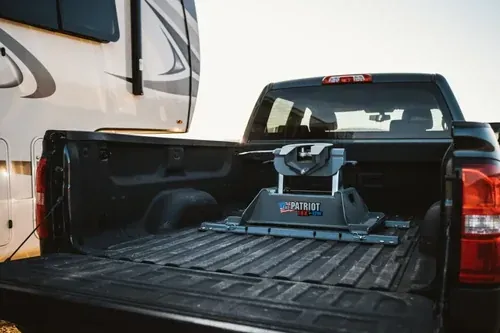
A gooseneck or a 5th wheel moves the trailer's weight off the bumper and into the bed, near the rear axle. A gooseneck couples to a ball in the bed, and it is common on flatbed, horse and equipment trailers. A 5th wheel locks the trailer's kingpin into a set of jaws, and it is the standard hitch for fifth-wheel campers. The trailer's coupler decides which one you need. We install B&W gooseneck and 5th wheel hitches, and how each one mounts depends on the truck.
Ford, Ram and GM pickups can come from the factory with a puck system: mounting points built under the bed, reached through capped holes in the bed floor. B&W's Companion OEM 5th wheel drops into the four holes and pins in place with no drilling, and B&W makes an OEM gooseneck ball and safety chain kit for the same factory systems.
A truck without pucks gets an under-bed mount. B&W's Turnoverball bolts to existing holes in the frame and needs one 4-inch hole in the bed floor. B&W states that no welding or bed removal is required. The ball flips over and sits flush when you are not towing, and the same mount carries B&W's Companion 5th wheel, which lifts out to give you the bed back. Its base weighs 98 or 129 pounds depending on the model, so plan for two people when it comes out.
So the bed stays on for the B&W systems we fit. We install on factory puck systems and on under-bed mounts, and when a truck has factory pucks we use them rather than add under-bed hardware. If your truck has a spray-in bedliner, B&W's advice is that either order works, and a liner sprayed after the hole is cut covers the cut edge. A drop-in liner needs a matching hole cut in it.
Tell us what else the bed will carry before we order. DECKED says its Drawer System is not compatible with gooseneck or 5th wheel hitches, because its center support sits where the hitch goes. Its Tool Box is, with at least 24 inches of depth and 6 inches of height clearance. A tonneau cover has to be open or off while a 5th wheel is hitched, so we plan the cover and the hitch together.

Starting prices and shop times, by job
Starting prices are the maker's current retail for the product alone, checked 3 October 2026; installation is quoted for your truck. Every price depends on the truck and what you tow. Our trailer hitch installation cost guide breaks down parts, labor and what moves the price.
Pick your starting point
See the results
“You never know what you’re going to get when you google around, well I’m happy to say if you’re reading this you don’t need to search anymore! Professional, courteous, knowledgeable and a straight up pleasure to work with! Window tint…on point, ceramic coating…on point, ppf…on point, tonneau cover…great suggestion! I’m confident that you cannot go wrong here, they pride themselves on their work!”
“We’ll be taking all our cars here. Eric and his team just did the 3M protective film on our new Tundra. The front bumper and grill are not simple applications, Eric made sure to talk us through what to look for if any of the film isn’t holding and to bring it back in and he’d fix it for us. He also tinted the front windows and they’re a perfect match to the rest. Their prices are very competitive, but it’s the absolutely top notch customer service, communication, and workmanship that make it an easy decision to come back. We’ll be getting our tonneau cover for our truck bed, ceramic coating for our older with a lot of life in her SUV, and will start using them to detail our cars given our great experience and the fact that everyone else continues to have the same.”
Towing a lifted truck on the Front Range
From Arvada, Golden or Wheat Ridge, the way to the mountains is I-70, and its long grades are where a towing setup gets tested. Two things matter most on that drive: the trailer sitting level, and its brakes doing their share on the way down.
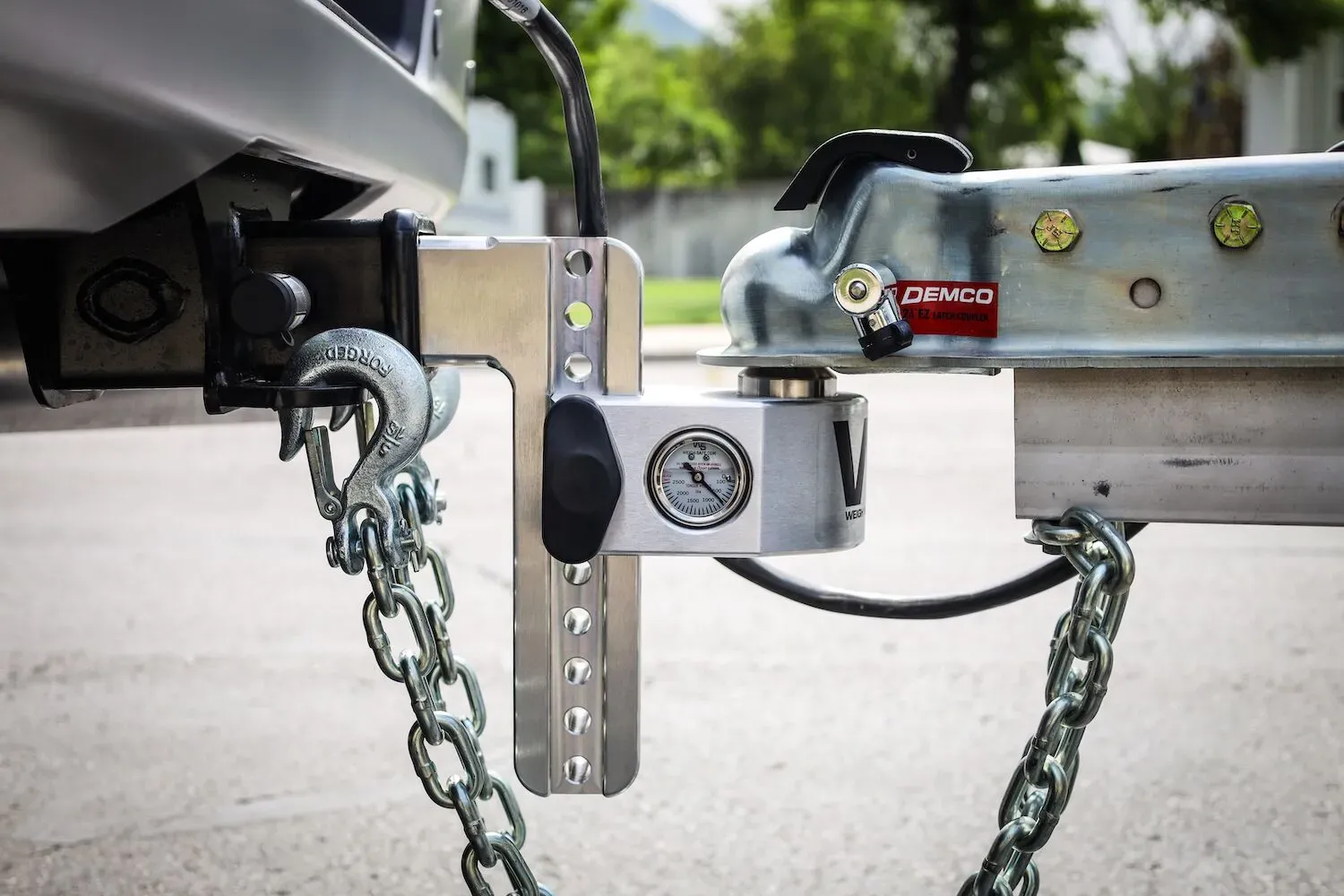
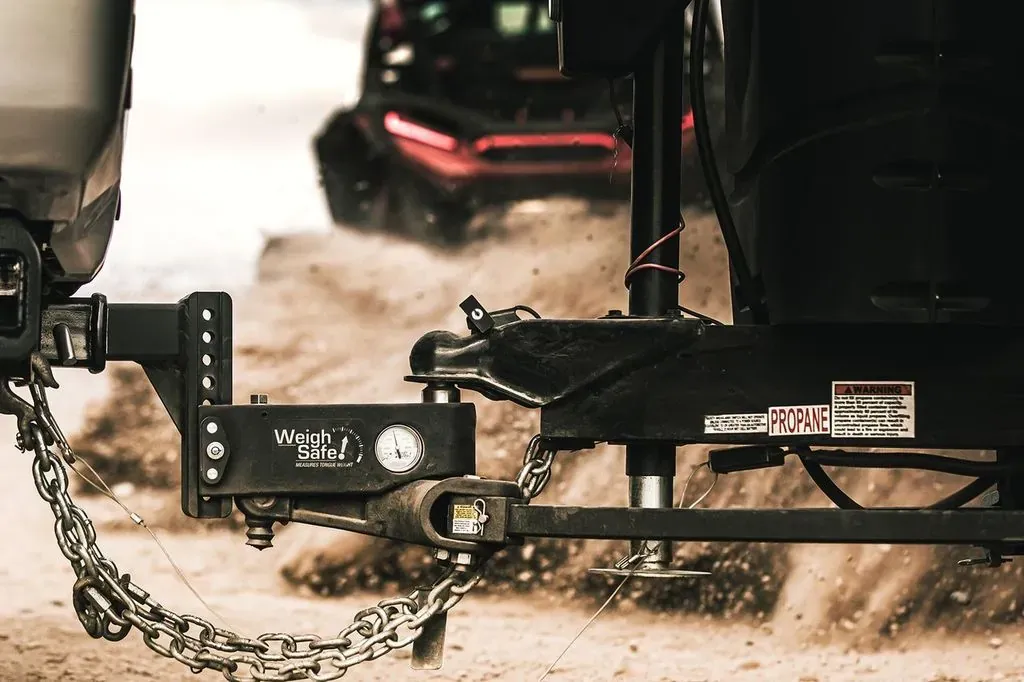
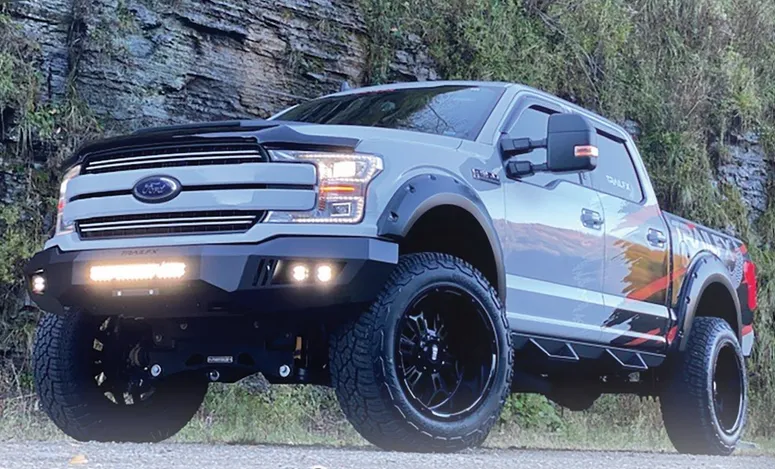
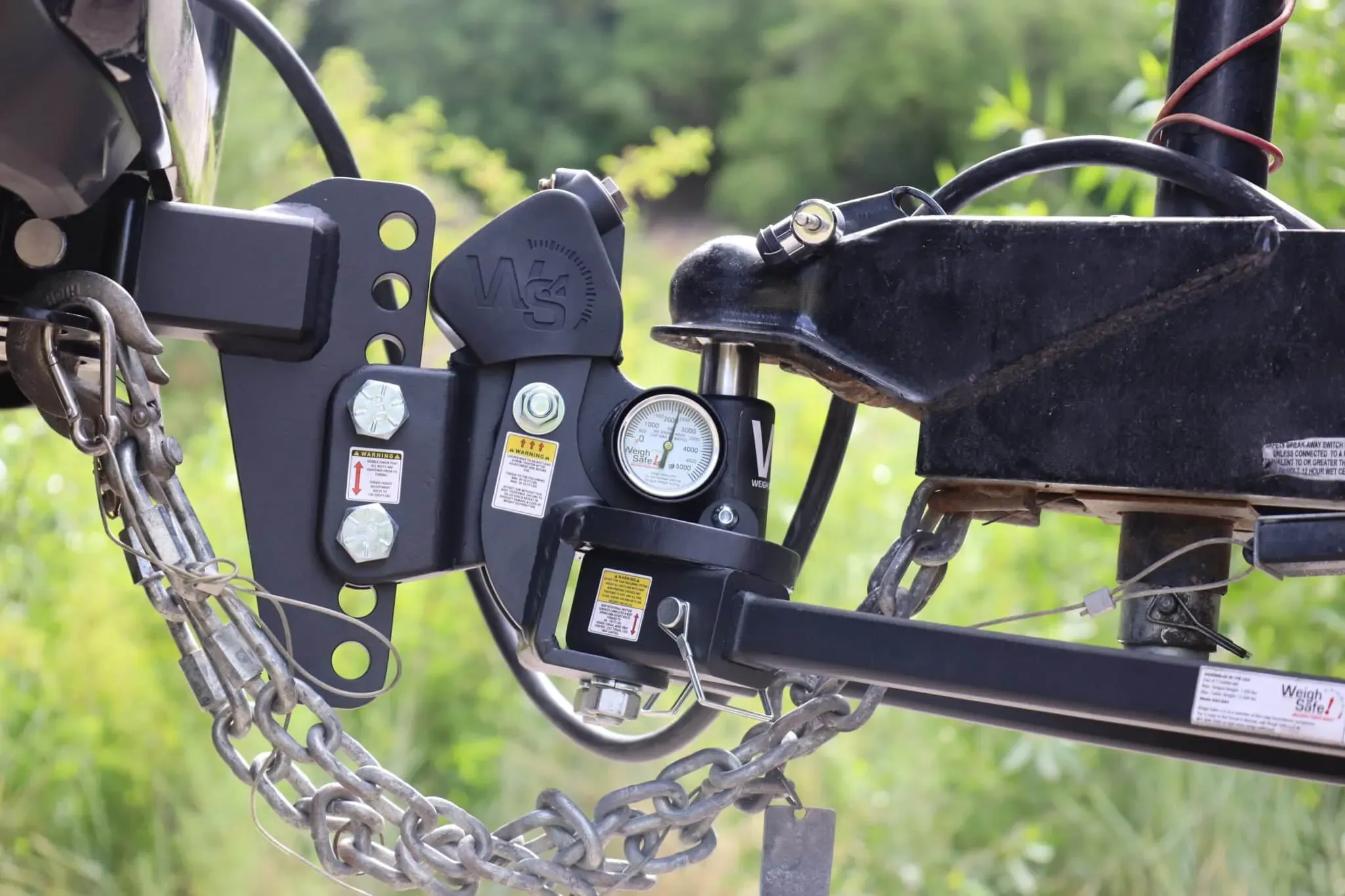
A leveling kit or lift raises the receiver, so the trailer's nose tips up unless the ball mount drops to meet it. The Weigh Safe drop hitch has a tongue weight gauge built into the shank, comes in 4, 6, 8 and 10-inch drops, and ships with 2-inch and 2-5/16-inch balls. CURT puts the target tongue weight at about 10 to 15 percent of gross trailer weight, and the gauge tells you where you are before you leave the driveway. If the truck is getting a lift and a hitch, tell us about the trailer when you book the lift, and we size the drop once.
We set the brake controller up for your trailer, so its brakes take their share on a long descent. Our towing guide covers weight distribution, payload and the rest of the setup.
Protect the bumper and tailgate
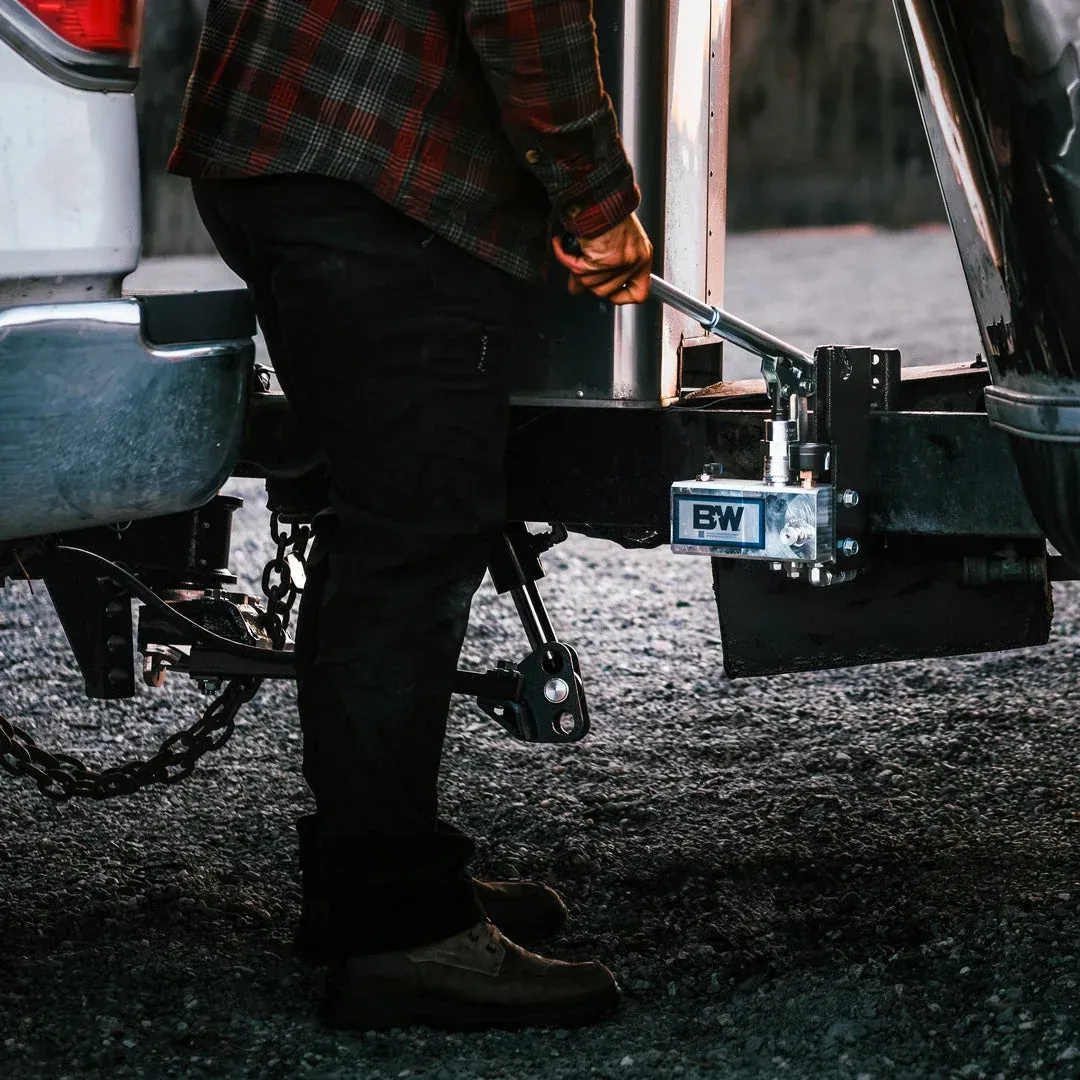
A ball mount swings against the bumper when you pull the pin, and a bike rack arm gets set against it when you load bikes. On a tight turn, a trailer tongue comes close to the bumper corners. Each leaves scuffs in the paint on the bumper top and the lower tailgate.
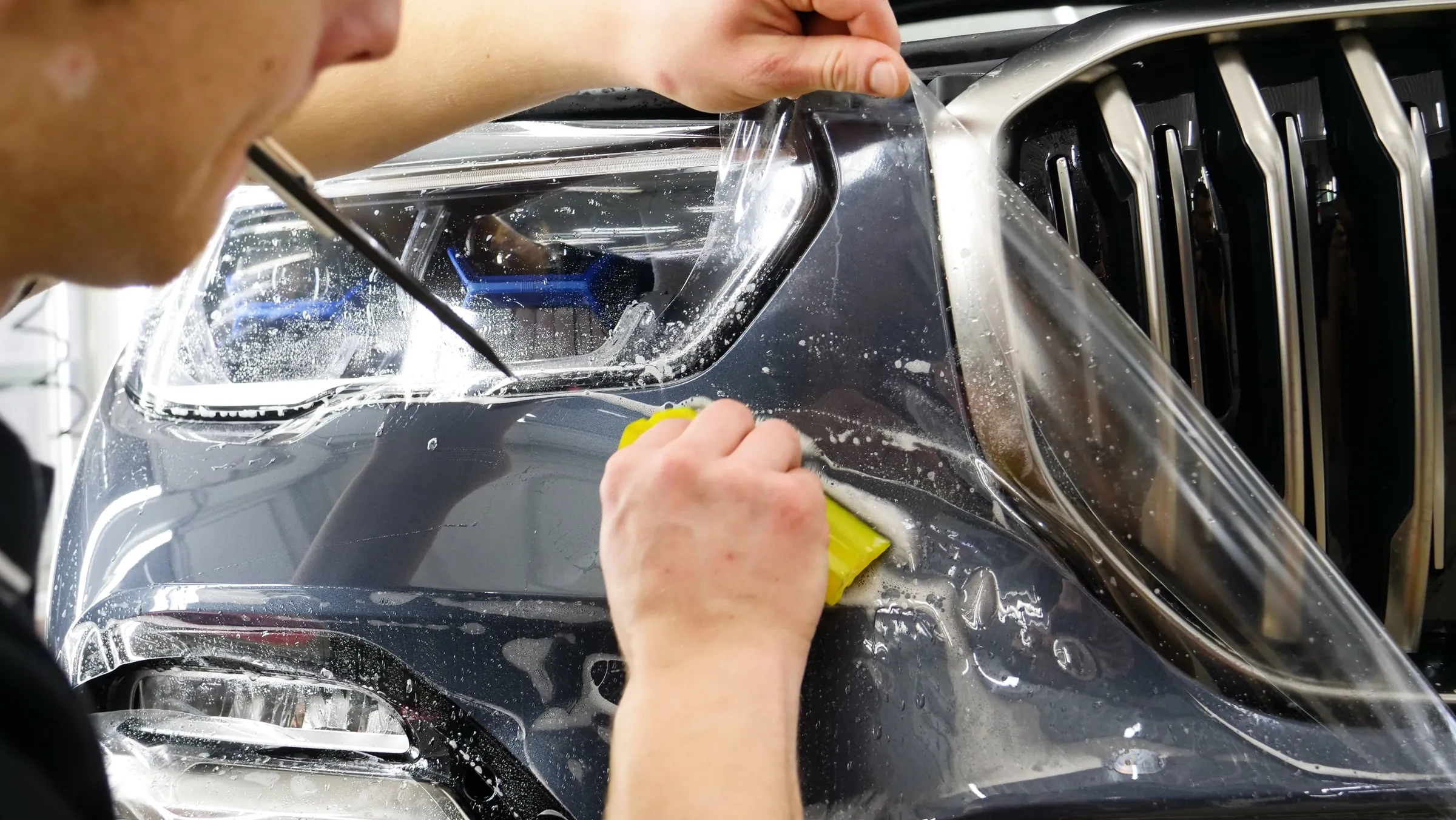
Clear paint protection film on those surfaces takes the scuffs so the paint under it does not. Ask for it when you book the hitch and we will quote both together.
How a hitch install goes
Some hitches bolt on in an hour; some mean lowering the exhaust or trimming the bumper cover. We check the instructions for your exact truck before we quote.
You can wait for most standard receiver and wiring jobs. For a 5th wheel or gooseneck, we'd rather you drop the truck off. Drop-off and pick-up hours: Mon–Fri · 8am–5pm.


 CURTHusky
Add it to the same visit
One drop-off, one pickup. These go on alongside this service.
Read this before you decide
Straight answers on what each option does, what it costs, and how to choose. No sales pitch.
Common questions
Do I need a trailer brake controller?
Can you put a 7-pin plug in the bed for my gooseneck or 5th wheel?
Can you set up a lifted or leveled truck for towing?
How much does it cost to install a hitch on your vehicle?
Where's the best place to get a trailer hitch installed?
Can I install a trailer hitch myself?
How much does it cost to install a gooseneck hitch?
Do you have to take the bed off to install a gooseneck hitch?
Can you install a hitch if my vehicle didn't come with one?
Does a Class V hitch increase my truck's towing capacity?
Do I need a weight distribution hitch?
Not sure which option?
Tell us your vehicle and we will send an honest recommendation, fast. No pressure, no upsell.