
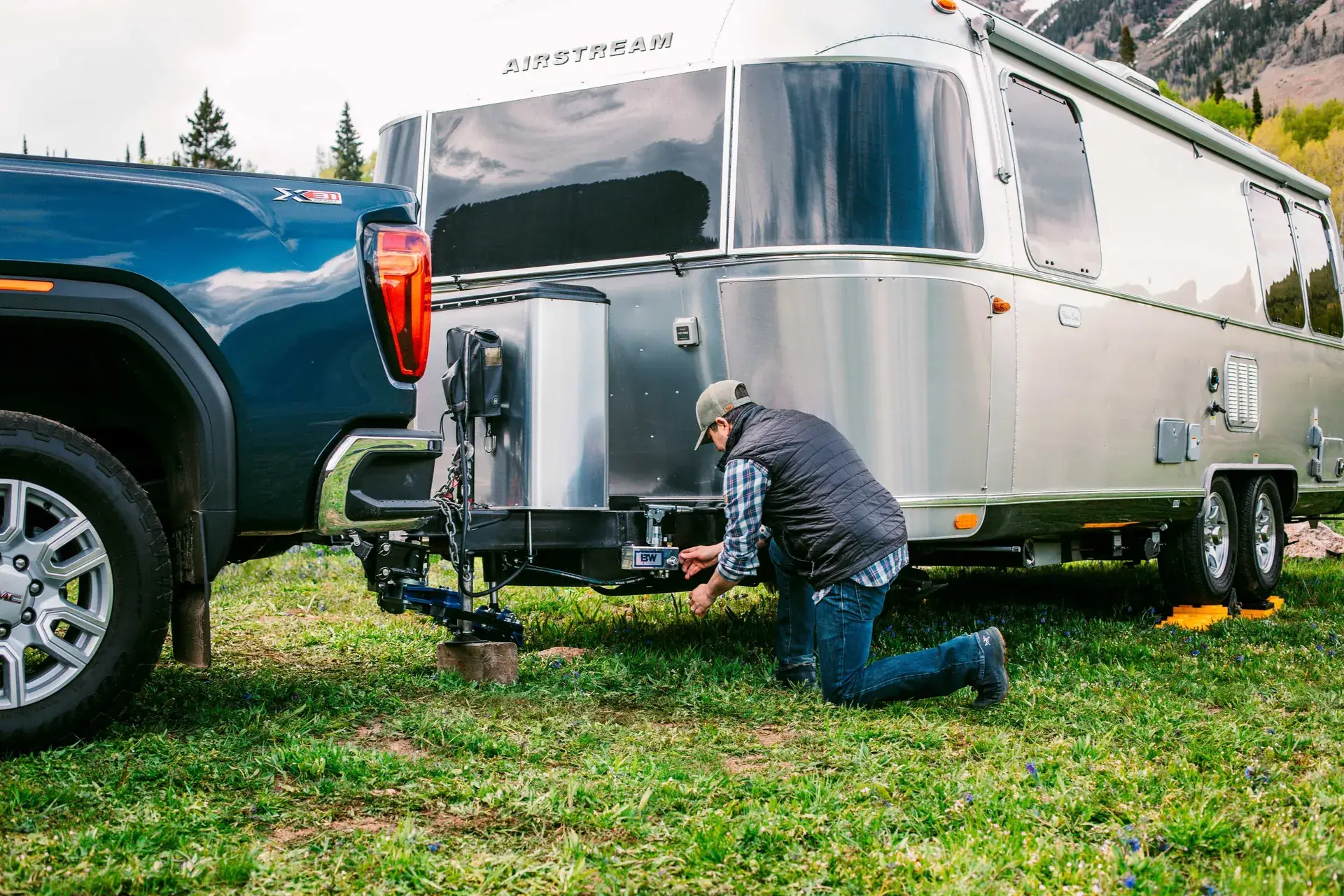
Weight distribution and sway control hitches, set up in Arvada
We sell, install and set up four weight distribution systems at our Arvada shop: Weigh Safe True Tow, B&W Continuum, CURT TruTrack and Husky Center Line TS. We pick one after we know the truck and the loaded trailer, then set it up with both here. Bring the trailer if you can, since it always helps the setup; if it can't come, we can still guide you. Install and setup take about 1 to 2 hours.
A weight distribution hitch puts tongue weight back on the front axle
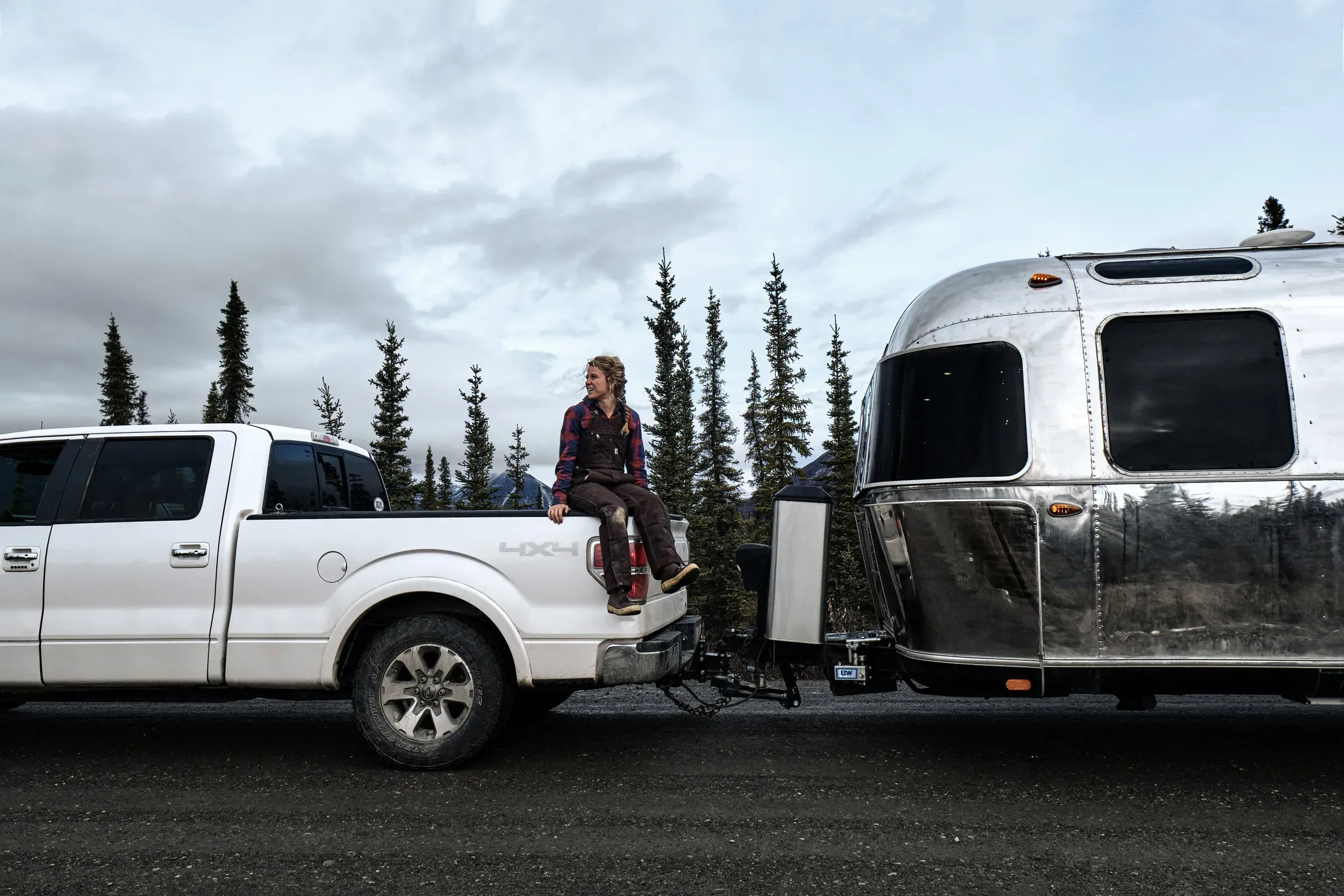
A bumper-pull trailer puts its tongue weight on the ball, behind the truck's rear axle. That pushes the rear of the truck down and lifts weight off the front axle, the one that steers. A weight distribution hitch adds spring bars between the hitch head and the trailer frame. They work as levers and move part of that load forward to the front axle and back to the trailer's axles. The goal is a truck and trailer that sit level with the front axle carrying its share.
No single trailer weight decides whether you need one
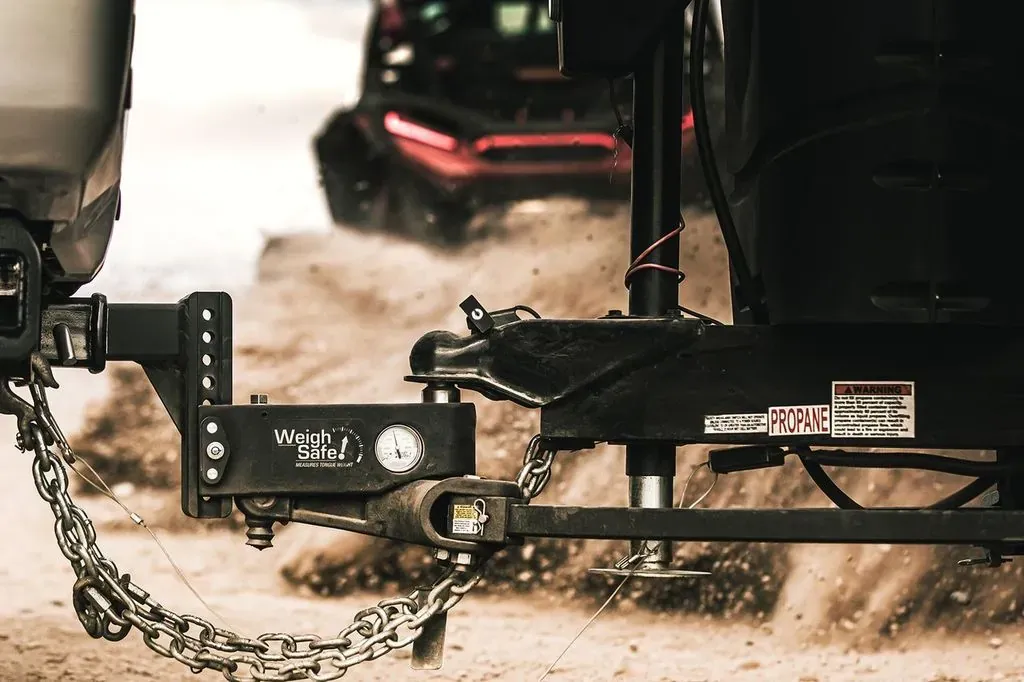
We will not give you a rule like "every trailer over 5,000 pounds needs weight distribution." The truck maker, the receiver maker and the trailer maker each set their own requirements, and some say when weight distribution must not be used as well as when it must. B&W puts it plainly: "The need for a WDH is usually mentioned in the tow vehicle owner's manual. For instance, some trucks require weight distribution for any trailer over 5,000 lb."
B&W adds two signs worth checking: the trailer weighs more than half as much as the truck, or the truck sags when you hook up. Neither one replaces the manual. Bring the truck, or the page of the owner's manual on towing, and the trailer's loaded weight and tongue weight, and we check all three makers' requirements before we quote a hitch.
Weight distribution and sway control do different jobs
Weight distribution manages where the tongue load goes. Sway control resists the trailer moving side to side behind the truck. Weigh Safe, B&W, CURT and Husky build sway control into the hitch, so there is no separate friction bar to add; Husky says the Center Line TS Plus has integrated sway control.
Sway control does not fix a bad setup. B&W lists what keeps a trailer tracking straight: tongue weight at the recommended amount (10 to 15 percent of the trailer's weight, usually), good tire pressure and tread, and a tow vehicle sized for the trailer. Speed, crosswinds, a passing semi on I-70 and how the trailer is loaded all count too. The hitch is one part of that list.
Four ways to set up the same job
Starting prices are the maker's current retail for the product alone, checked 1 October 2026; installation is quoted for your truck. Every price depends on the truck, the receiver and the trailer. The ratings above are for the hitch; your truck's own ratings still set the limit. Send us your year, make and model, the trailer, and its loaded weight.
See the results
“You never know what you’re going to get when you google around, well I’m happy to say if you’re reading this you don’t need to search anymore! Professional, courteous, knowledgeable and a straight up pleasure to work with! Window tint…on point, ceramic coating…on point, ppf…on point, tonneau cover…great suggestion! I’m confident that you cannot go wrong here, they pride themselves on their work!”
“We’ll be taking all our cars here. Eric and his team just did the 3M protective film on our new Tundra. The front bumper and grill are not simple applications, Eric made sure to talk us through what to look for if any of the film isn’t holding and to bring it back in and he’d fix it for us. He also tinted the front windows and they’re a perfect match to the rest. Their prices are very competitive, but it’s the absolutely top notch customer service, communication, and workmanship that make it an easy decision to come back. We’ll be getting our tonneau cover for our truck bed, ceramic coating for our older with a lot of life in her SUV, and will start using them to detail our cars given our great experience and the fact that everyone else continues to have the same.”
Weigh Safe measures the weight; B&W sets a pressure you can repeat
Most weight distribution hitches look alike on the tongue: a head, two spring bars, two brackets. The difference is how you set them up, and that is how we tell them apart.
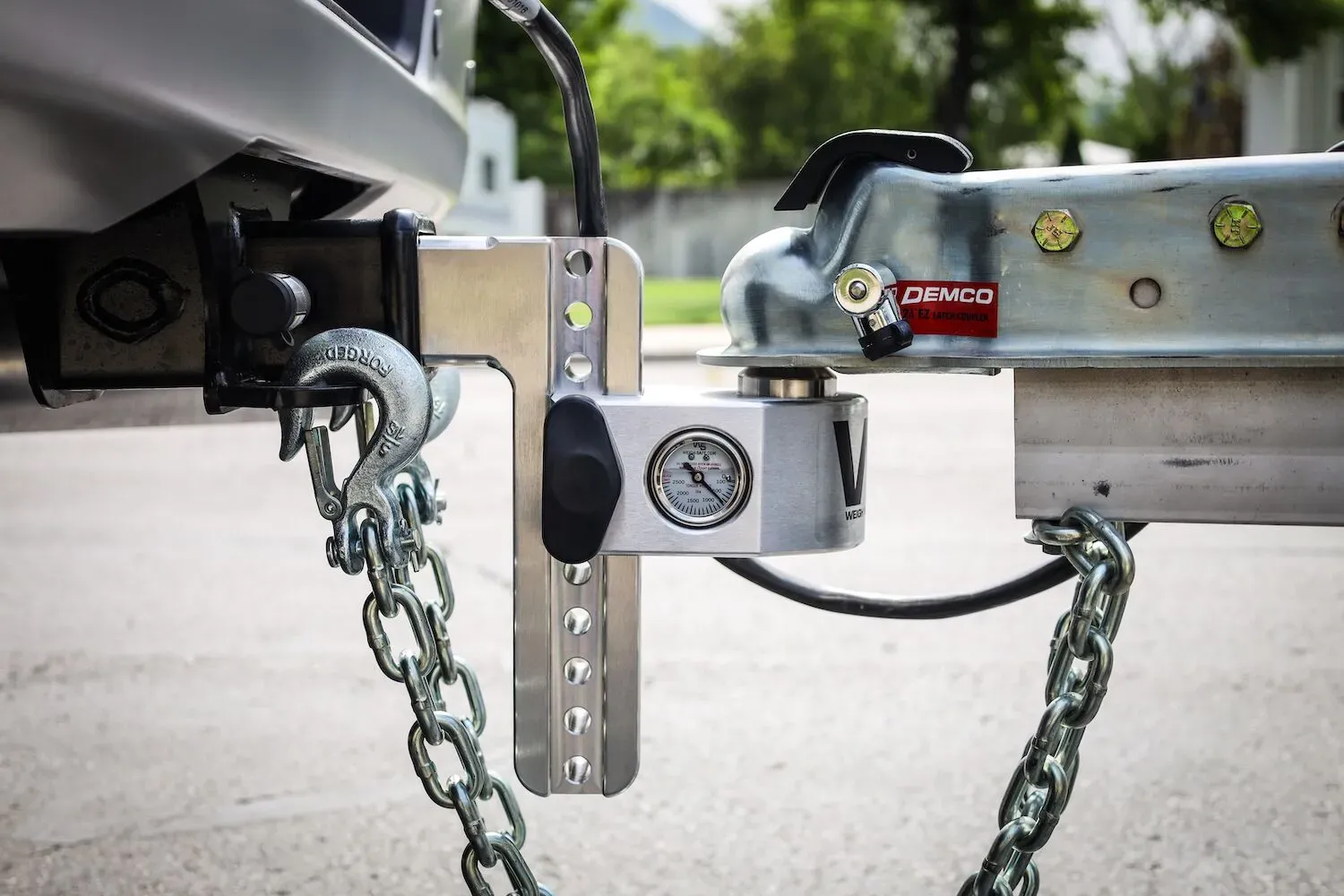
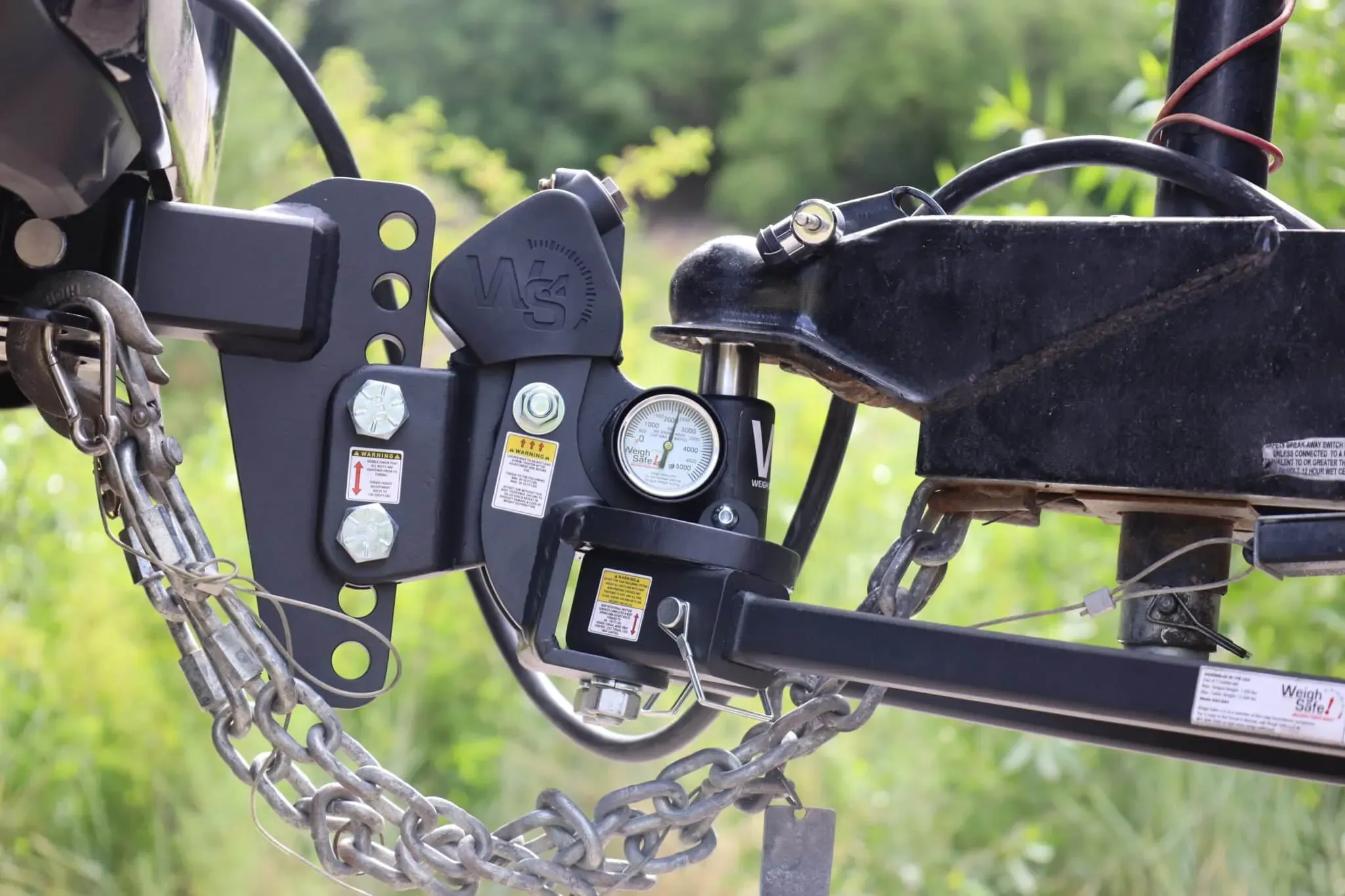
With a True Tow, the gauge on the hitch reads the tongue weight when you drop the trailer on the ball, then reads distributed tongue weight as you load the bars. Weigh Safe's DTW tool tells you the reading to aim for. You adjust until the gauge matches, and nobody has to judge by eye whether the truck looks level. Weigh Safe's live adjustment uses an internal pivot, so you change the setting without taking the head off, and the head moves in 1-1/4-inch steps.
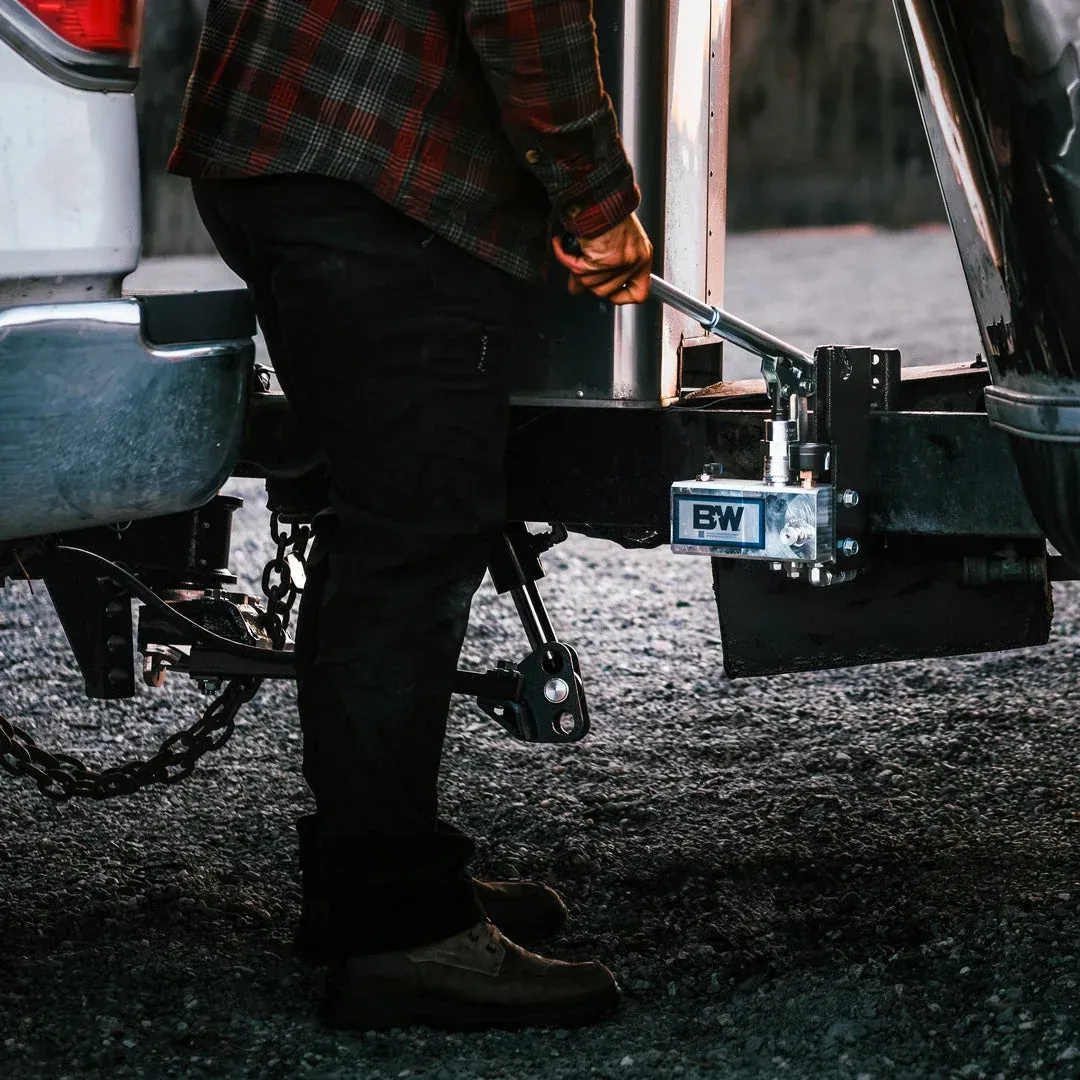
With a Continuum, you pump a handle until enough weight has moved to the front axle, and the gauge shows the pressure that got you there. Next time, pump to the same number. Change the load and you fine-tune the pressure instead of moving chain links.
| System | How you set it | Sway control | Maker's ratings |
|---|---|---|---|
| Weigh Safe True Tow | Built-in gauge reads tongue weight and distributed tongue weight | Four friction areas, at the head and at the trailer brackets | 6,000 to 22,000 lb GTW, by model |
| B&W Continuum | Hydraulic pump and pressure gauge | Continuous friction at a single pivot point | 600 to 1,600 lb tongue weight |
| CURT TruTrack 2P and 4P | Conventional spring bars and brackets | Two friction points (2P) or four with a spring and cam in the head (4P) | Up to 10,000 lb GTW (2P) or 15,000 lb and 1,500 lb tongue weight (4P) |
| Husky Center Line TS | Trunnion spring bars, with engagement pins for added friction | Four-point friction, built in | 8,000 to 14,000 lb GTW and 800 to 1,400 lb tongue weight, by model |
Match the spring bars to the loaded tongue weight
Spring bars are rated for a range of tongue weight: B&W's composite bars cover 600 to 1,600 pounds, and CURT and Weigh Safe sell their hitches in weight classes. Buying the heaviest bars available does not make the setup safer. Bars rated far above the trailer's tongue weight are stiff for that load and the combination rides worse for it.
So we size them to the trailer as you tow it. The tongue weight of an empty camper at the dealer is not the tongue weight on I-70. Batteries, propane, water, a generator, bikes on the tongue and gear in the front storage compartment all add to it. That is why we like measuring: bring the trailer loaded, and the setup matches the trip.
Ratings change with the model and your truck's setup, so we check both before we quote.
Already own a B&W Tow & Stow?
Keep it for the trailers that do not need weight distribution. B&W states that weight distribution and sway-bar systems use specialized attachment pieces that are not compatible with the Tow & Stow, so a camper that needs weight distribution needs its own hitch. Our drop hitch guide covers sizing the Tow & Stow and the Weigh Safe drop hitch for everything else you tow.
The rest of the setup: receiver, brakes, air bags and a lifted truck
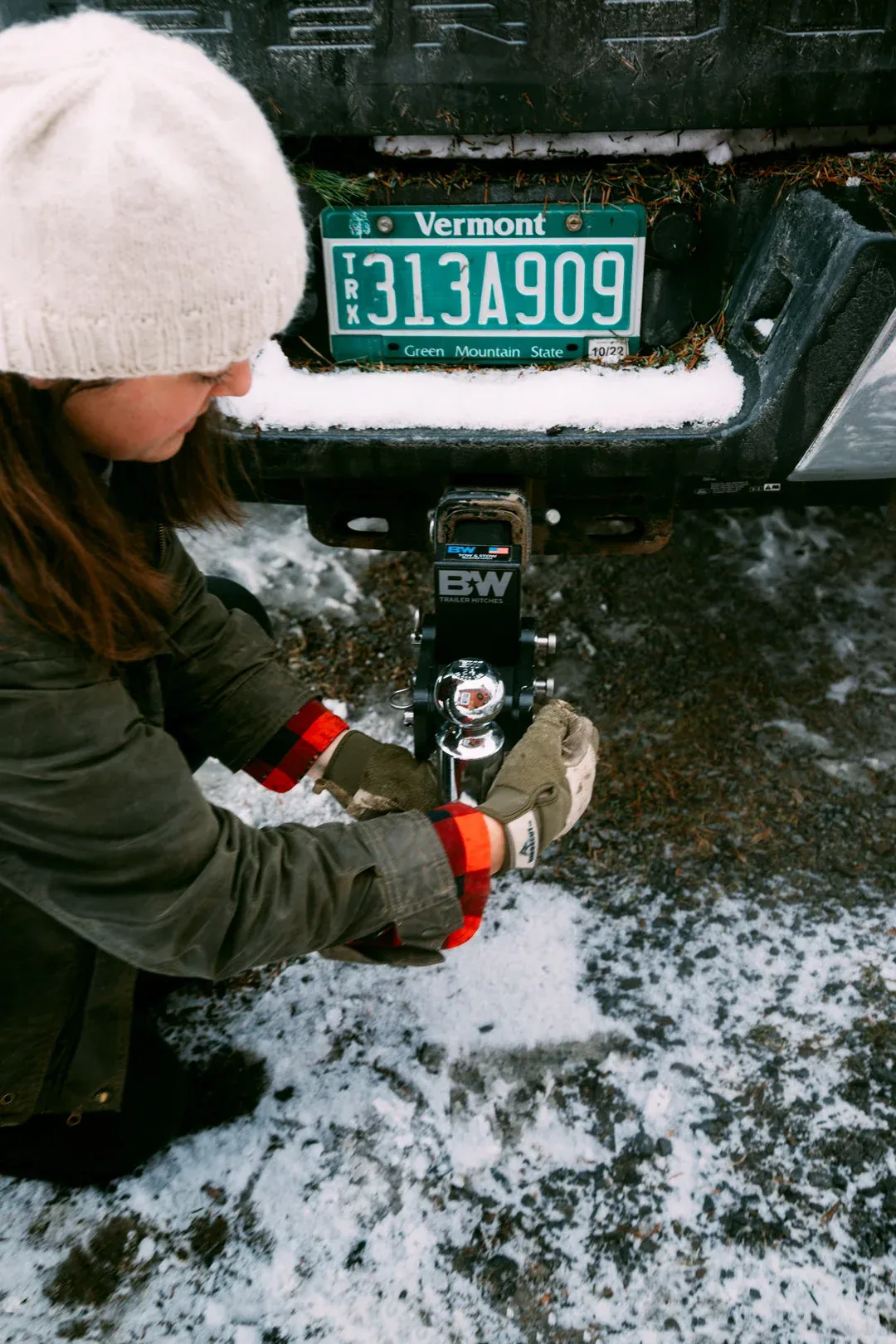
The receiver has to be rated and approved for weight distribution before the hitch goes in it. A camper heavy enough for weight distribution usually has electric brakes, and that means a 7-pin plug, a brake controller and a breakaway switch; Colorado's trailer brake rule is on our hitch installation page. Neither changes your truck's tow rating, payload or GVWR, and neither does the hitch.
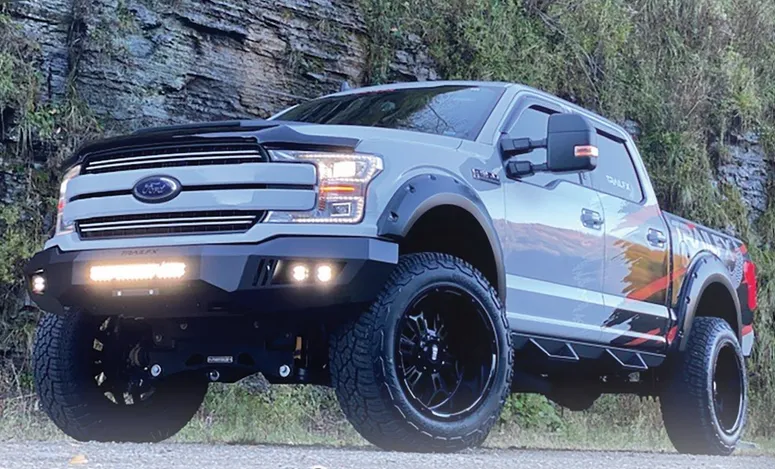
If the truck still squats with the bars set, air springs support the rear suspension; they do a different job and some trucks use both. And if the truck is leveled or lifted, the receiver sits higher, so the hitch needs a shank with more drop. Tell us about the trailer when we plan the lift.
How we set one up
The hitch comes last. Bring the truck and the trailer together if you can, loaded the way you travel.
Depending on the setup, a weight distribution job can be a wait appointment. Have a product already? Ask us first: we look at customer-supplied hitches case by case. Drop-off and pick-up hours: Mon–Fri · 8am–5pm.

 CURTHusky
Add it to the same visit
One drop-off, one pickup. These go on alongside this service.
Read this before you decide
Straight answers on what each option does, what it costs, and how to choose. No sales pitch.
Common questions
Do weight distribution hitches really work?
At what weight should I use a weight distribution hitch?
What are the disadvantages of a weight distribution hitch?
Do I need a weight distribution hitch for a 5000 lb trailer?
Is weight distribution the same as sway control?
Will a weight distribution hitch stop all trailer sway?
Does weight distribution increase my truck's towing capacity?
Can I use weight distribution with my B&W Tow & Stow?
Do air bags replace a weight distribution hitch?
Can I use weight distribution on a lifted truck?
Not sure which option?
Tell us your vehicle and we will send an honest recommendation, fast. No pressure, no upsell.